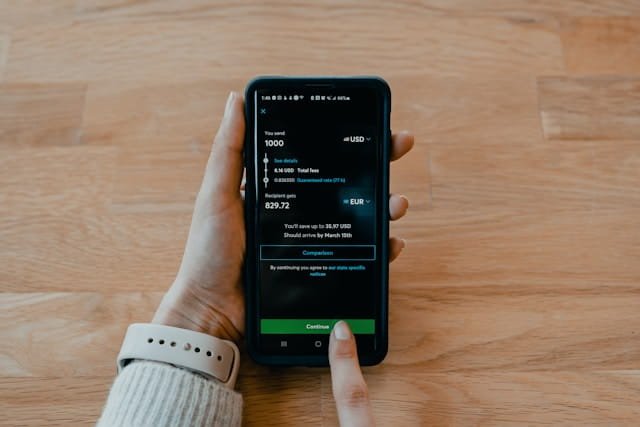
You open an app, type in a phone number, tap “send,” and a few seconds later your friend has the money in their account. No cash, no check, no trip to the bank. It feels almost like magic — but behind that simple tap sits a surprisingly complex chain of bank networks, security checks, and real-time processing systems. In this article, we’ll break down exactly how peer-to-peer (P2P) payment apps work, what happens behind the screen when you hit send, and what you should understand as a user before linking your bank account to one.
What Are Peer-to-Peer Payment Apps?
Peer-to-peer payment apps are digital platforms that let individuals send money directly to one another using a smartphone, without needing to exchange cash, write a check, or visit a bank branch. Instead of a physical transaction, the app moves value between two digital accounts that are connected, in the background, to real bank accounts, debit cards, or stored balances.
What makes these apps different from a simple bank transfer is the layer of software sitting on top of the banking system. That software is designed to make the experience feel instant, social, and mobile-first — while the actual movement of money still relies on established financial infrastructure that has existed for decades.
The Technology Stack Behind P2P Payments
To understand how these apps function, it helps to think of them as having three layers: the user-facing app, the app’s internal ledger system, and the banking network that ultimately settles the funds.
Bank Account Linking and Verification
When you first sign up for a P2P payment app, you’re typically asked to link a bank account, debit card, or both. This is usually done through a secure connection that verifies your account ownership — sometimes through micro-deposits (small test transactions the app sends to confirm the account is real), and increasingly through direct, encrypted bank-verification partnerships that confirm ownership instantly.
This linking step matters because it establishes the “funding source” the app will pull from when you send money, and the “destination” it will deposit into when you receive money.
The Role of the ACH Network
Most standard transfers between a P2P app and your bank account move through the Automated Clearing House (ACH) network, a system that has processed electronic payments in the United States for decades. ACH transfers are typically batched and processed in cycles rather than instantly, which is why moving money from your app balance to your actual bank account can sometimes take one to three business days.
This is an important detail many users overlook: the payment between two users inside the app can feel instant, but moving that money out to a linked bank account often depends on the slower ACH rail unless an instant transfer option is used.
Instant Transfers vs Standard Transfers
Many apps now offer an “instant transfer” option, usually for a small fee, which routes the transaction through debit card networks instead of ACH. Card networks are built for real-time authorization, so they can push funds to your bank account within minutes rather than days. This is a good example of how fintech companies layer newer, faster payment rails on top of older infrastructure to improve the user experience.
Step-by-Step: What Happens When You Send Money
| Step | What Happens |
|---|---|
| 1. Initiation | You select a recipient and enter an amount inside the app. |
| 2. Authentication | The app verifies your identity through a PIN, biometric scan, or login session. |
| 3. Internal Ledger Update | If both users hold a balance within the app, the transfer often happens instantly on the company’s internal ledger — no bank movement required yet. |
| 4. Funding Source Check | If you don’t have an app balance, the app pulls funds from your linked card or bank account. |
| 5. Notification | Both sender and recipient receive a real-time notification confirming the transaction. |
| 6. Settlement | The recipient can keep the funds in their app balance or transfer them to their bank account via ACH or an instant transfer option. |
This is the key insight most users never realize: when money moves between two people who both use the same app, it often isn’t actually touching the banking system in real time. The app is simply updating internal account balances on its own ledger — similar to how a casino updates chip balances internally before anyone cashes out. The real bank-to-bank movement typically only happens when someone chooses to withdraw funds to their external bank account.
A Practical Example: Imagine two friends split a dinner bill. One pays with a card, and the other sends their share through a P2P app. The moment the transfer is confirmed, the recipient’s in-app balance increases immediately — but no money has moved through the banking system yet. It isn’t until the recipient decides to transfer that balance to their personal bank account that the ACH network (or an instant-transfer card network) actually gets involved. This two-layer design is why in-app transfers feel instantaneous while bank withdrawals can take longer.
Security Measures in P2P Payment Apps
Encryption
Reputable P2P payment platforms encrypt data both in transit and at rest, meaning your account details are scrambled into unreadable code both while being sent across the internet and while stored on company servers. This is standard practice across the fintech industry and is typically required for compliance with financial data protection standards.
Fraud Monitoring Systems
Behind the scenes, most apps run automated systems that analyze transaction patterns in real time. These systems look for anomalies — a sudden large transfer to an unfamiliar recipient, multiple rapid transactions, or a login from an unusual location — and can flag or temporarily hold a transaction for review.
Authentication Layers
Two-factor authentication, biometric login (fingerprint or facial recognition), and device recognition are now standard across most major P2P platforms. These layers exist specifically because P2P transfers are typically irreversible once completed, unlike a credit card charge that can often be disputed.
Common Categories of P2P Payment Apps
Not all P2P apps are built the same way. Broadly, they tend to fall into a few categories:
- Bank-linked transfer apps: These connect directly to your existing bank account and move money bank-to-bank, often backed by the banking industry itself.
- Wallet-based apps: These hold your funds inside the app’s own digital wallet, letting you spend, send, or withdraw that balance whenever you choose.
- Card-network apps: These route transfers through debit or credit card rails, which is often what enables “instant” transfer speeds.
Understanding which category an app falls into helps explain why transfer speeds, fees, and account requirements can differ so much between platforms.
Benefits of P2P Payment Technology
- Speed and convenience: Sending money no longer requires a bank visit, a check, or even cash on hand.
- Lower friction for everyday transactions: Splitting bills, paying rent to a roommate, or reimbursing a friend has become far simpler.
- Accessibility: Many apps only require a smartphone and a basic bank or card connection, lowering the barrier to digital payments.
- Real-time visibility: Users can see transaction history and balances instantly, which supports better day-to-day money tracking.
Limitations and Risks to Understand
- Irreversibility: Once a P2P transfer is sent and accepted, it typically cannot be reversed by the app, unlike some card transactions.
- Scam targeting: Because transfers are fast and hard to reverse, P2P apps are frequently targeted by scammers impersonating sellers, family members, or service providers.
- Limited regulatory protection on wallet balances: Money sitting inside an app’s wallet may not always carry the same protections as money sitting in a traditional bank account, depending on how the app structures its accounts.
- Withdrawal delays: Standard transfers to your bank account can take a few business days unless you pay for instant transfer.
P2P Payments vs Traditional Bank Transfers
| Feature | Traditional Bank Transfer | P2P Payment App |
|---|---|---|
| Speed | Often 1–3 business days | Instant between app users; 1–3 days for bank withdrawal (or instant for a fee) |
| Setup | Requires bank account and routing/account numbers | Requires linking a card, phone number, or email |
| Everyday usability | More suited to larger, planned transfers | Built for quick, casual, everyday transactions |
| Reversibility | Sometimes reversible through the bank | Usually final once completed |
Tips for Using P2P Apps Safely
- Only send money to people you personally know and trust. Treat a P2P transfer the same way you’d treat handing someone cash.
- Enable every available security feature — biometric login, PIN protection, and transaction notifications.
- Double-check the recipient’s details before confirming a transfer, since these payments are typically irreversible.
- Avoid using P2P apps for purchasing goods from strangers, since they lack the buyer protections that dedicated marketplace payment systems offer.
- Review linked accounts periodically and remove any cards or bank connections you no longer use.
“The convenience of instant peer-to-peer payments comes with a trade-off: speed and simplicity in exchange for less built-in reversibility. Understanding that trade-off is the first step to using these tools safely.”
The Future of P2P Payment Technology
As real-time payment infrastructure continues to expand across the U.S. banking system, P2P apps are likely to move even further away from older batch-processing rails like ACH and toward true real-time settlement between banks. This shift could eventually make the distinction between an “instant in-app transfer” and an “instant bank transfer” disappear entirely, as the underlying banking infrastructure itself becomes faster.
When Professional Guidance Might Help
For most everyday users, P2P apps are simple enough to use without any outside help. However, a few situations may call for more careful research or professional input:
- Using P2P apps for business or freelance income, where tax reporting rules may apply
- Managing large or recurring transfers where account protections and regulatory coverage matter
- Uncertainty about whether a specific app or platform is properly licensed to operate
Frequently Asked Questions (FAQ)
Is money sent through a P2P app FDIC insured?
It depends on how the app structures the account. Funds sitting in a linked traditional bank account are typically covered under normal bank protections, while funds sitting inside an app’s own digital wallet may be handled differently. Checking the app’s own account terms is the most reliable way to confirm this.
Can a P2P payment be reversed if sent to the wrong person?
Generally, once a transfer is accepted by the recipient, it cannot be automatically reversed by the app. Some platforms offer a request or dispute process, but there’s no guarantee the recipient will return the funds.
Why does it take days to move money from a P2P app to my bank account?
Standard transfers usually rely on the ACH network, which processes payments in batches rather than instantly. Many apps offer a paid instant-transfer option that uses debit card networks instead, which settle faster.
Are P2P payment apps safe to use?
When used with strong account security (biometric login, PIN, notifications) and only with trusted recipients, these apps are generally considered safe. Most risk comes from user behavior, such as sending money to strangers, rather than the underlying technology itself.
Do P2P apps charge fees?
Standard transfers between a linked bank account and the app are often free, while instant transfers, credit card funding, or business transactions frequently carry a small fee. Fee structures vary by platform.
Conclusion
Peer-to-peer payment apps have quietly rebuilt how everyday people move money, wrapping decades-old banking infrastructure inside a fast, mobile-first experience. Understanding what’s actually happening behind that “send” button — from internal ledger updates to ACH settlement and card-network instant transfers — helps users make smarter, safer decisions about how and when to use these tools. As real-time banking infrastructure continues to evolve, P2P apps are likely to keep getting faster, but the core principles of account security and recipient trust will remain just as important as ever.