

Insurance Technology
What Is Parametric Insurance and How Does It Pay Out Automatically
Sep
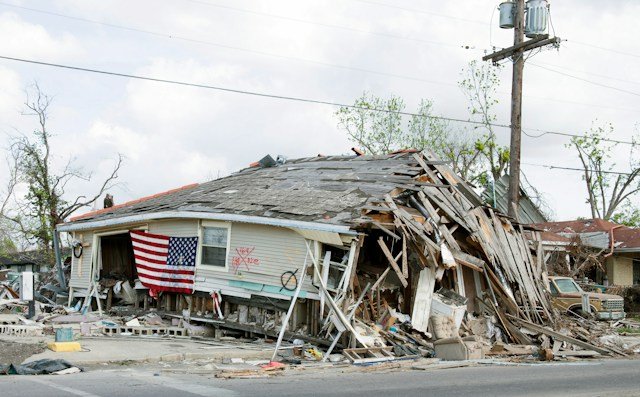
A hurricane makes landfall. Two homeowners, two streets apart, both file claims the same afternoon. One of them has a standard homeowner’s policy. The other has a parametric policy layered on top of it. Six weeks later, one of them is still waiting on an adjuster’s final report. The other one got paid within three days of the storm — before the adjuster even showed up at the first house. Same storm, same afternoon, two completely different insurance experiences. The difference isn’t luck. It’s a fundamentally different way of deciding what triggers a payout.
The Traditional Path: Prove the Damage
Standard insurance works backward from loss. The storm happens, then someone has to document exactly what broke, assign a dollar value to it, and convince an insurer that the claimed amount matches reality. An adjuster gets dispatched, often weeks after the event given how many claims flood in after a major storm. Photos get taken. Estimates get negotiated. Eventually, a check gets cut — for whatever the adjuster and insurer agree the damage was actually worth.
The Parametric Path: Prove the Trigger, Not the Damage
Parametric insurance skips nearly all of that. Instead of insuring against “damage,” it insures against a specific, objectively measurable event — wind speed exceeding a set threshold at a specific location, rainfall crossing a certain number of inches, an earthquake registering above a given magnitude within a defined radius. If that measurable condition is met, the policy pays out a predetermined amount, automatically, regardless of what the actual damage turns out to be. No adjuster inspects anything. No itemized loss gets calculated. The trigger either happened or it didn’t, and the data confirming it usually exists within hours.
The Entire Product, in One Sentence
A parametric policy is a bet on a number, not a bet on a bill. You and the insurer agree in advance: if a specific, independently measured value crosses a specific line, a specific payout happens — full stop, no negotiation, no adjuster.
How Insurers Actually Price a Trigger
Setting a trigger threshold isn’t arbitrary — insurers lean heavily on historical event data to calculate how frequently a given threshold has been crossed in a specific location over past decades, then price the premium against that observed frequency, similar in principle to how a traditional policy prices against historical claims data. A threshold set too low triggers payouts too often, making the policy expensive to sustain; set too high, and it rarely pays out at all, making it a poor value for the policyholder. Finding the right threshold is as much a statistical exercise as it is a product design decision, which is part of why credible parametric providers lean on decades of historical weather or seismic data rather than rough estimates.
The Technology Making Faster Payouts Possible
None of this would work at the speed it does without modern data infrastructure. Satellite monitoring, dense networks of weather stations, and automated data feeds mean the information needed to confirm a trigger is often available within hours of an event, rather than requiring someone to manually verify conditions on the ground. Some newer parametric products go a step further, using smart contracts — self-executing digital agreements — to automate the payout itself the moment verified data confirms the trigger, removing even the administrative step of someone manually approving the payment once the data comes in.
What Actually Counts as a Trigger
| Insurance Type | Typical Trigger Metric | Data Source |
|---|---|---|
| Hurricane / windstorm | Sustained wind speed above a set threshold at a specific location | Government weather agency wind field data |
| Earthquake | Magnitude above a set level within a defined radius | Seismograph network readings |
| Crop / agricultural | Rainfall below (or above) a set threshold over a growing period | Regional weather station or satellite rainfall data |
| Flight delay | Flight delayed or canceled beyond a set number of minutes | Airline and flight-tracking data feeds |
| Extreme heat | Temperature above a set threshold for a set number of consecutive days | Weather station temperature records |
Where the Data Actually Comes From
This is the part that makes the whole model work: the trigger data has to come from an independent, trusted third-party source that neither the policyholder nor the insurer controls. For weather-based triggers, that’s typically a national weather agency or a recognized meteorological data provider. For earthquakes, it’s seismograph networks. For flight-related products, it’s live airline and airport data feeds. Because the source is independent and the threshold was agreed on in writing before the event, there’s essentially nothing left to argue about once the data comes in — the number either crossed the line or it didn’t.
How a payout actually gets confirmed:
- Policy sets the trigger in advance — for example, sustained winds of 100+ mph within a 25-mile radius of a specific address
- The storm happens
- Verified wind data from the agreed data source is pulled for that exact location
- If the recorded value meets or exceeds the threshold, the trigger is confirmed
- Payout is released automatically, often without any additional paperwork from the policyholder
The Trade-Off Nobody Puts on the Brochure: Basis Risk
Here’s the catch, and it’s a real one. Because payout is based purely on the measured trigger, not actual damage, there’s a genuine possibility of mismatch between the two. A storm could hit the exact wind speed threshold and pay out in full, even if a particular house somehow escaped serious damage. Or, more painfully, a storm could fall just one mile-per-hour short of the trigger threshold, causing very real damage to a specific property, and the policy pays nothing at all — because the measured number, not the actual loss, is what the contract is built around.
This gap between “what the trigger says happened” and “what actually happened to you specifically” has a name in the industry: basis risk. It’s the price of speed and simplicity, and it’s the single biggest reason parametric insurance is usually sold as a supplement to traditional coverage, not a full replacement for it.
“Traditional insurance asks ‘how much did you actually lose?’ Parametric insurance asks ‘did the number we agreed on get crossed?’ Those are two different questions, and they can occasionally produce two different — sometimes frustrating — answers for the exact same event.”
The Parametric Product Most Americans Have Already Bought Without Realizing It
Flight delay insurance, increasingly offered at checkout when booking travel, is parametric insurance in its most consumer-friendly form. The trigger is simple and publicly verifiable: did the flight get delayed beyond a set number of minutes, or canceled. If it did, payout happens automatically, often within hours, pulled directly from flight-tracking data — no submitted receipts, no proving what the delay actually cost you in missed connections or hotel stays. It’s the same underlying mechanism as hurricane parametric insurance, just scaled down to a much smaller, much faster, much more familiar everyday product.
Where Parametric Insurance Actually Shows Up in the U.S.
- Agricultural insurance: Farmers in drought-prone regions increasingly use rainfall-indexed parametric policies alongside traditional crop insurance, since a slow claims process can be financially devastating when an entire growing season is on the line.
- Hurricane and named-storm coverage: Businesses in coastal areas, particularly those needing fast cash flow to reopen, often layer parametric wind or storm surge policies on top of standard commercial property insurance.
- Earthquake coverage: Especially relevant in seismically active regions, where traditional earthquake claims can involve lengthy structural assessments before any payout begins.
- Travel and flight delay products: Now common as an add-on during airline or travel booking, representing most people’s actual first exposure to parametric insurance.
- Event cancellation coverage: Increasingly built around measurable triggers like extreme weather thresholds rather than a full damage-assessment process.
- Municipal and government risk pools: Some city and state governments now purchase parametric coverage specifically to ensure rapid access to disaster-response cash, without waiting on a lengthy claims process while emergency needs are immediate.
Why Businesses Care More About This Than Individual Homeowners Do
Speed matters differently depending on who’s affected. A homeowner waiting six weeks for a claim is frustrated. A business waiting six weeks for a claim, with no revenue coming in and payroll still due, can be existentially threatened. This is a major reason parametric insurance adoption has grown faster in commercial and agricultural contexts than in personal homeowner policies — the value of “paid within days, no questions asked” scales directly with how much a delay actually costs the policyholder in the meantime.
What Parametric Insurance Is Not Designed to Replace
It’s worth being direct about this: parametric insurance is not a substitute for comprehensive, damage-based coverage on something like a primary home. Because of basis risk, and because payout amounts are fixed in advance rather than tied to actual repair costs, it works best as a fast-cash supplement — covering immediate needs like temporary housing, emergency repairs, or payroll continuity — while a traditional claim works through its slower, more thorough process in parallel.
A useful way to think about the relationship: traditional insurance is designed to eventually make you financially whole. Parametric insurance is designed to get you through the gap between the disaster and that eventual outcome, when cash flow, not precision, is the most urgent problem.
Where This Idea Actually Came From
Parametric structures aren’t a brand-new fintech invention — early versions trace back decades in specialized reinsurance markets, where large institutional players used index-based triggers to hedge catastrophic risk long before the concept trickled down to everyday consumer products. What’s changed more recently isn’t the underlying concept so much as the accessibility: better data infrastructure, cheaper satellite monitoring, and automated processing have made it economically viable to offer parametric products at much smaller scales — down to an individual homeowner or a single flight booking — rather than only large institutional risk pools.
A Worked Example of What a Payout Actually Looks Like
Hypothetical parametric hurricane add-on:
- Policy trigger: sustained winds of 96+ mph within 30 miles of the insured address
- Payout structure: $10,000 if the trigger is met at all, plus an additional $5,000 for every 10 mph above the base threshold, up to a $30,000 cap
- Storm arrives with sustained winds of 112 mph recorded at the nearest verified station
- Payout calculation: $10,000 base + $5,000 (for the first 10 mph increment) + partial credit toward the next increment, depending on the specific policy’s rounding rules
- Funds released once the wind reading is confirmed against the agreed data source — no inspection required
Notice that nowhere in that calculation does anyone ask what actually happened to the house. The formula was agreed to before the storm, and the payout follows the formula, not the aftermath.
Questions People Actually Have
Can I buy parametric insurance directly, or only as an add-on?
Both exist. Standalone parametric products are available, particularly for businesses and in agricultural markets, while consumer-facing versions like flight delay coverage are typically sold as an add-on during another purchase.
Is parametric insurance regulated the same way as traditional insurance?
In the U.S., parametric products are generally subject to state insurance regulation similar to other insurance lines, though the specific product structure and disclosure requirements can differ given the trigger-based payout mechanism.
What happens if the trigger data source itself is disputed or wrong?
Policies specify the exact data source and methodology in advance precisely to minimize this risk, though disputes over data accuracy can still occur in rare cases, which is why choosing a policy with a well-established, independent data provider matters.
Does a parametric payout affect a separate traditional insurance claim?
Generally no — the two typically operate independently, meaning a parametric payout doesn’t usually reduce or interfere with a separate traditional claim for the same event, though specific policy language should always be confirmed directly.
Can basis risk ever work in the policyholder’s favor?
Yes, and this is the flip side people rarely mention. If the measured trigger is crossed but actual damage turns out to be minimal, the policyholder still receives the full predetermined payout, essentially receiving more than a strict damage-based calculation would have provided. Basis risk cuts both ways — it just isn’t guaranteed to cut in your favor on any given event.
Is parametric insurance more expensive than traditional coverage?
It depends heavily on the specific trigger, location, and coverage amount. Because parametric insurers avoid the administrative cost of claims adjusting, some of that savings can be passed on, though pricing ultimately reflects the statistical likelihood of the trigger being crossed, similar to any actuarially priced insurance product.
The Two Streets, Revisited
Go back to that hurricane. The homeowner with only traditional coverage eventually got paid — accurately, based on actual documented damage, but slowly. The one with parametric coverage layered on top got a check almost immediately, sized to a pre-agreed formula rather than a room-by-room damage assessment. Neither approach is strictly better. They’re solving different problems: one prioritizes accuracy, the other prioritizes speed. Understanding which problem you’re actually trying to solve is the real starting point for deciding whether parametric coverage belongs anywhere in your own insurance picture.