

Digital Payments & Security
How Tokenization Protects Your Card Data in Digital Payments
Sep
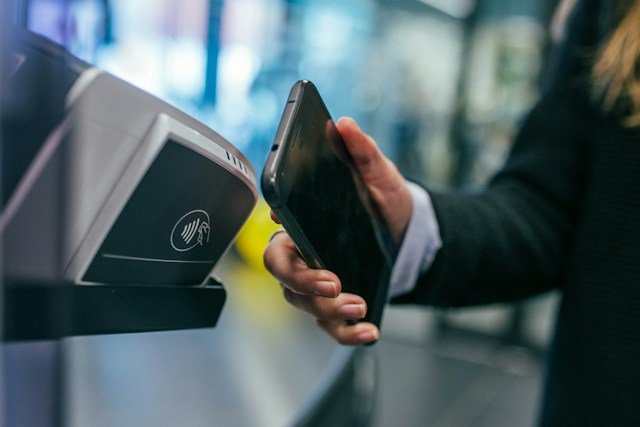
Every time you tap your phone at a checkout counter or save your card for one-click checkout on a shopping app, your actual 16-digit card number likely never touches that merchant’s system at all. In its place sits something called a token — a randomly generated stand-in that looks like a card number but is, by design, completely useless to anyone who steals it. This quiet substitution is called tokenization, and it’s one of the most important, least visible security technologies protecting digital payments today. This article breaks down exactly what tokenization is, how it actually works behind the scenes, and why it’s become such a foundational part of modern payment security.
What Tokenization Actually Means
Tokenization is the process of replacing sensitive card data — most importantly, your actual card number — with a randomly generated substitute value called a token. This token has no mathematical or exploitable relationship to your real card number, meaning that even if it were somehow intercepted or stolen, it couldn’t be reverse-engineered back into usable payment information.
The token is what actually gets stored and transmitted throughout most of the payment process, while your real card number is kept in a separate, highly secured system, only ever referenced briefly when a transaction genuinely needs to be authorized through the card network.
A Brief History of How Tokenization Became Standard
Tokenization as a payment security concept gained significant momentum following a wave of high-profile retail data breaches in the early 2010s, where attackers successfully extracted millions of raw card numbers from merchant systems. These incidents pushed card networks and payment processors to accelerate the adoption of tokenization standards industry-wide, particularly as mobile wallets and contactless payments began gaining mainstream traction shortly afterward. Today, tokenization is deeply embedded in how major card networks structure their digital payment infrastructure, largely as a direct response to those earlier, costly breaches.
How Tokenization Is Different From Encryption
These two concepts are often confused, but they work quite differently. Encryption scrambles data using a mathematical formula that can, with the correct key, be reversed back into the original information. Tokenization, by contrast, doesn’t mathematically transform the original data at all — it simply substitutes it with a random value that has no derivable relationship to the original number, with the real data stored separately in a secure vault.
| Feature | Encryption | Tokenization |
|---|---|---|
| How it works | Mathematically scrambles data using a key | Substitutes data with an unrelated random value |
| Reversible? | Yes, with the correct decryption key | No mathematical reversal possible; requires looking up the original in a secure vault |
| Common use | Protecting data in transit or storage broadly | Specifically protecting card numbers during payment processing |
In practice, modern payment systems typically use both technologies together — encryption to protect data as it travels across networks, and tokenization to ensure the actual card number is rarely, if ever, stored or handled directly by merchants.
How the Tokenization Process Actually Works
Step 1: Card Data Enters the System
When you enter your card details at checkout, or when your phone’s digital wallet is set up with a card, that raw card number is captured momentarily, typically encrypted immediately for the brief transmission to a secure tokenization system.
Step 2: The Token Is Generated
A token service provider — often the card network itself, like Visa or Mastercard, or a specialized payment processor — generates a random token that takes the place of the real card number for that specific merchant, device, or app. This token is formatted to look similar to a real card number so existing payment systems can process it correctly, without ever actually being one.
Step 3: The Real Card Number Is Securely Vaulted
Your actual card number is stored in a highly secured system, often called a token vault, maintained by the token service provider rather than the individual merchant. This is a critical distinction — the merchant never needs to store your real card number at all, since the token is what they use for all future transactions.
Step 4: Ongoing Transactions Use the Token
From this point forward, whenever you make a purchase through that specific merchant, app, or digital wallet, the token — not your real card number — is what gets transmitted and processed. Only at the final authorization step, deep within the secure payment network, does the system briefly map the token back to your real card number to complete the transaction with your bank.
A Practical Example: Imagine adding your credit card to a mobile wallet app for tap-to-pay purchases. During setup, your real card number is sent securely to generate a unique token specifically tied to that phone and that wallet app. From that point on, every time you tap to pay at a store, the token — not your actual card number — is what’s transmitted to the store’s payment terminal. If that store’s systems were ever breached by attackers, the stolen data would only include these device-specific tokens, which are useless outside the exact combination of that phone, that wallet app, and that merchant relationship — providing essentially no value to anyone attempting to exploit the stolen data.
Why Tokenization Matters So Much for Data Breaches
One of the most significant practical benefits of tokenization is how it changes the impact of a merchant data breach. Historically, if a retailer’s payment systems were compromised, attackers could potentially access thousands or millions of real, usable card numbers stored in the merchant’s database. With tokenization widely adopted, a similar breach would instead expose only merchant-specific tokens — data that has no value outside the very narrow, specific transaction context it was created for.
“Tokenization doesn’t just make card data harder to steal — it makes stolen data worthless. That shift, from protecting information to making it meaningless outside its original context, is the real security breakthrough behind the technology.”
Device-Specific and Merchant-Specific Tokens
A particularly important detail is that tokens are typically scoped narrowly — often tied to a specific device, a specific merchant, or both, rather than functioning as a single universal replacement for your card number across every possible use. This means the token generated for your phone’s mobile wallet is different from the token generated when that same card is saved on a separate shopping app, which is different again from the token used for a recurring subscription payment.
| Token Type | Scope | Example Use Case |
|---|---|---|
| Device-bound token | Tied to a specific phone or device | Mobile wallet tap-to-pay |
| Merchant-specific token | Tied to a specific retailer or app | Saved card for one-click checkout |
| Transaction-specific token | Generated fresh for a single transaction | One-time online purchases in some systems |
This narrow scoping is deliberate: even if one specific token were somehow compromised, the damage would be contained to that single device-merchant relationship, rather than exposing a single reusable value that could be used across countless other merchants or services.
How Tokenization Protects Recurring and Stored Payments
Subscription services and apps that let you save a card for future purchases rely heavily on tokenization to avoid storing your actual card number long-term. Instead of the subscription service holding your real 16-digit number in its own database, indefinitely creating an ongoing security liability, it simply stores your token, using it to request each recurring charge through the token service provider, which handles the actual mapping back to your real card details behind the scenes.
This is particularly valuable for the growing number of subscription-based services people maintain simultaneously — streaming platforms, software subscriptions, meal kits, and similar recurring charges. Rather than dozens of separate companies each independently storing your raw card number, tokenization concentrates that sensitive data in far fewer, more heavily secured systems, significantly narrowing the overall attack surface across your entire digital financial footprint.
What Happens When Your Physical Card Expires or Is Replaced
A practical benefit of tokenization that many people never notice is how it handles card replacements. Many tokenization systems are designed to automatically update the underlying card details associated with a token when your bank issues a new card number, expiration date, or security code — meaning your saved subscriptions and stored payment methods often continue working seamlessly without requiring you to manually update every single service where your card was saved.
Tokenization vs Traditional Card-on-File Storage
| Approach | What the Merchant Stores | Risk If Breached |
|---|---|---|
| Traditional card-on-file | The actual card number, often encrypted | Potentially usable card data exposed if encryption is compromised |
| Tokenized card-on-file | Only a merchant-specific token | Stolen tokens are not usable outside their narrow original context |
PCI Compliance and Why Tokenization Matters for Businesses
For merchants, tokenization carries a significant practical benefit beyond pure security: it substantially reduces the compliance burden associated with the Payment Card Industry Data Security Standard, or PCI DSS, since systems that never actually store real card numbers face far fewer strict requirements than those that do. This is a major reason so many businesses, from small online shops to large retailers, have adopted tokenized payment processing through their payment gateway providers rather than building and maintaining their own card storage systems.
Common Misunderstandings About Tokenization
- “Tokenization means my card number is encrypted.” They’re related but distinct technologies — tokenization replaces data with an unrelated random value, while encryption mathematically scrambles data in a reversible way.
- “My token can be used anywhere, like my real card number.” Tokens are typically scoped narrowly to a specific device or merchant relationship, meaning a stolen token generally can’t be used outside that narrow original context.
- “Tokenization eliminates all payment fraud risk.” It significantly reduces the risk associated with stolen card numbers specifically, but doesn’t address every category of payment fraud, such as certain types of account takeover or social engineering attacks.
- “Tokenization is a newer technology than encryption.” Both technologies have existed for decades in various forms; what’s changed is how widely tokenization has been specifically adopted across mainstream consumer payment systems in recent years.
How to Tell If a Payment Method Is Using Tokenization
- Digital wallets like mobile tap-to-pay services universally rely on tokenization as a core part of how they function.
- Look for “card-on-file” security disclosures from apps or services where you’ve saved a card, which often specifically mention tokenized storage.
- Check if your card number changes visually during checkout on a saved payment method, sometimes displaying a device-specific reference rather than your actual card digits.
The Future of Tokenization in Payments
As digital and contactless payments continue to grow, tokenization is increasingly becoming the default standard rather than an optional security add-on, particularly as card networks continue expanding token services to cover a broader range of payment scenarios, including person-to-person transfers and in-app purchases beyond traditional retail checkout. This trend is likely to continue reducing the overall amount of raw, usable card data stored across the digital payment ecosystem, narrowing the potential impact of future data breaches industry-wide.
Some industry observers also expect tokenization principles to extend further into adjacent areas of digital identity beyond payments, applying similar substitution logic to protect other sensitive personal data as more everyday transactions and interactions move online.
When Professional Guidance Might Help
- If you’re a business owner evaluating payment processors and want to understand tokenization’s role in reducing your PCI compliance burden
- If you’ve experienced unauthorized charges and want to understand whether tokenized or traditional card storage was involved
- If you’re building a payment system and need detailed technical guidance on implementing tokenization correctly
Frequently Asked Questions (FAQ)
Can someone use a stolen token to make purchases?
Generally, no. Tokens are typically scoped narrowly to a specific device, merchant, or transaction context, meaning a stolen token usually can’t be used outside that original narrow relationship, unlike a stolen raw card number.
Does tokenization slow down the checkout process?
No. Token lookups and mapping happen automatically within the payment network in a fraction of a second, meaning tokenized transactions typically process just as quickly as traditional card transactions.
Do I need to do anything to enable tokenization for my card?
Usually not. Tokenization typically happens automatically behind the scenes when you add a card to a digital wallet, save it on a shopping app, or use certain contactless payment methods, without requiring any specific action from you.
Is tokenization only used for credit and debit cards?
While most commonly associated with card payments, similar tokenization principles are increasingly applied to other sensitive payment and identity data, including bank account numbers used in certain digital payment systems.
Can a merchant see my real card number if tokenization is used?
Typically no. The entire purpose of tokenization is to ensure the merchant only ever handles the token, never the actual card number, which remains securely stored with the token service provider rather than the merchant’s own systems.
What’s the difference between a token and a virtual card number?
They’re conceptually similar and often work together. A virtual card number is typically a customer-facing, temporary or single-use number, while tokenization more broadly refers to the underlying substitution technology that can power virtual card numbers, mobile wallets, and stored payment methods alike.
Conclusion
Tokenization has quietly become one of the most important security technologies protecting everyday digital payments, working invisibly behind nearly every tap-to-pay purchase, saved card, and recurring subscription charge. By replacing your actual card number with a narrowly scoped, meaningless substitute, this technology fundamentally changes what a data breach can actually expose — turning what used to be immediately usable stolen card data into information with essentially no value outside its original, narrow context. Understanding how tokenization works doesn’t just satisfy curiosity about payment security; it explains why modern digital payments, despite handling more transactions than ever, have become genuinely harder to exploit at scale.